What is a Pick and Pack Warehouse? A Simple Guide for eCommerce
A Simple Guide for eCommerce. This guide will simply explain what these services are, how they can transform your business, and when it’s the right time to make the switch.
3PL GUIDEECOMMERCE FULFILLMENT
Pik Pak Digital
12/17/20257 min read
If you're running an online store, you know the thrill of seeing new orders come in. But you also know the reality that follows: finding the right products, packing them securely, printing labels, and making endless trips to the post office.
As your business grows, this process can quickly go from a small task to a full-time job, stealing time you should be spending on marketing, product development, and customer service. This is where a pick and pack warehouse comes in.
This guide will simply explain what these services are, how they can transform your business, and when it’s the right time to make the switch.
What Does 'Pick and Pack' Actually Mean?
In simple terms, 'pick and pack' is the process of outsourcing your entire order fulfillment operation. Instead of storing products in your garage or a spare room, you send them to a professional warehouse. This facility acts as your dedicated logistics team.
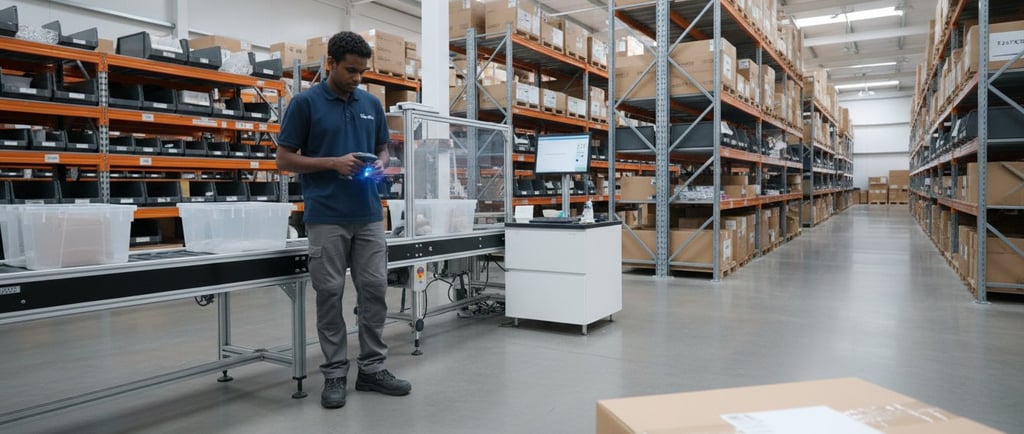
They securely receive and store your inventory. When a customer places an order on your website, the order is automatically sent to the warehouse. Their team then 'picks' the correct items from the shelves, 'packs' them into a suitable box with packing materials, and prepares them for shipping. It is the engine room that powers growing eCommerce businesses, allowing them to operate at scale without being buried in cardboard boxes and packing tape.
The Four Core Steps of the Pick and Pack Process
The process might sound complex, but it’s a highly efficient system broken down into four key stages:
Step 1: Receiving and Storing Your Inventory Securely. Your products are shipped to the warehouse, where they are checked in, counted, and stored in dedicated, secure locations. This inventory is tracked in real-time through a warehouse management system.
Step 2: The 'Pick' – Order comes in, items are located. When an order is received from your online store, a warehouse team member gets a picking list showing the items needed and their locations. They then retrieve these items from the shelves.
Step 3: The 'Pack' – Items are safely boxed for shipping. The picked items are taken to a packing station. Here, they are carefully packed into the right-sized box with appropriate materials to prevent damage during transit. The shipping label is then applied.
Step 4: The 'Ship' – The order is sent to your customer. The packed order is handed over to a shipping carrier (like Australia Post or a courier service) for delivery to your customer. Tracking information is automatically updated in your system.
Is a Pick and Pack Warehouse the Same as a 3PL?
You’ll often hear the term ‘3PL’ used alongside pick and pack, and for good reason. Yes, pick and pack is a core service offered by a 3PL.
The term 3PL stands for Third-Party Logistics, which refers to a company that provides a range of outsourced logistics services for eCommerce businesses. A true 3PL partner handles your entire supply chain, including warehousing, inventory management, picking, packing, and coordinating shipping.
So, when you partner with a 3PL provider, you are getting a comprehensive pick and pack warehouse solution and much more.
The Main Benefits: Why You Should Stop Packing Boxes
Making the decision to outsource your logistics is a critical step towards scaling your business. It’s not just about offloading a task; it’s a strategic move that frees up your most valuable resources: your time, money, and physical space. By handing over the fulfillment process, you can get back to focusing on what you do best—growing your brand.
Save Time and Focus on Your Business Growth
Imagine what you could achieve if you weren't spending hours every week on manual packing and post office runs. By outsourcing, you can reinvest that valuable time into the activities that actually drive sales, like marketing campaigns, new product development, and building customer relationships. Let the logistics experts handle the operational details while you focus on your business's long-term strategy and vision.
Reduce Shipping Costs and Improve Speed
One of the biggest advantages of using a fulfillment warehouse is access to cheaper shipping rates. Because these facilities ship thousands of parcels every day, they have negotiated significant bulk discounts with major carriers—savings they pass on to you. Furthermore, their efficient processes mean orders are processed and dispatched much faster, leading to quicker delivery times for your customers. You also eliminate the recurring cost of buying boxes, tape, and other packing materials.
Scale Effortlessly as Your Orders Increase
What happens when you have a massive sale or hit a seasonal peak like Christmas? For many businesses, it means chaos. With a fulfillment partner, you can handle these surges without hiring temporary staff or working around the clock. Your fulfillment capacity grows seamlessly with your business, ensuring you never have to worry about running out of storage space or getting overwhelmed by order volume. See how Pik Pak makes it easy.
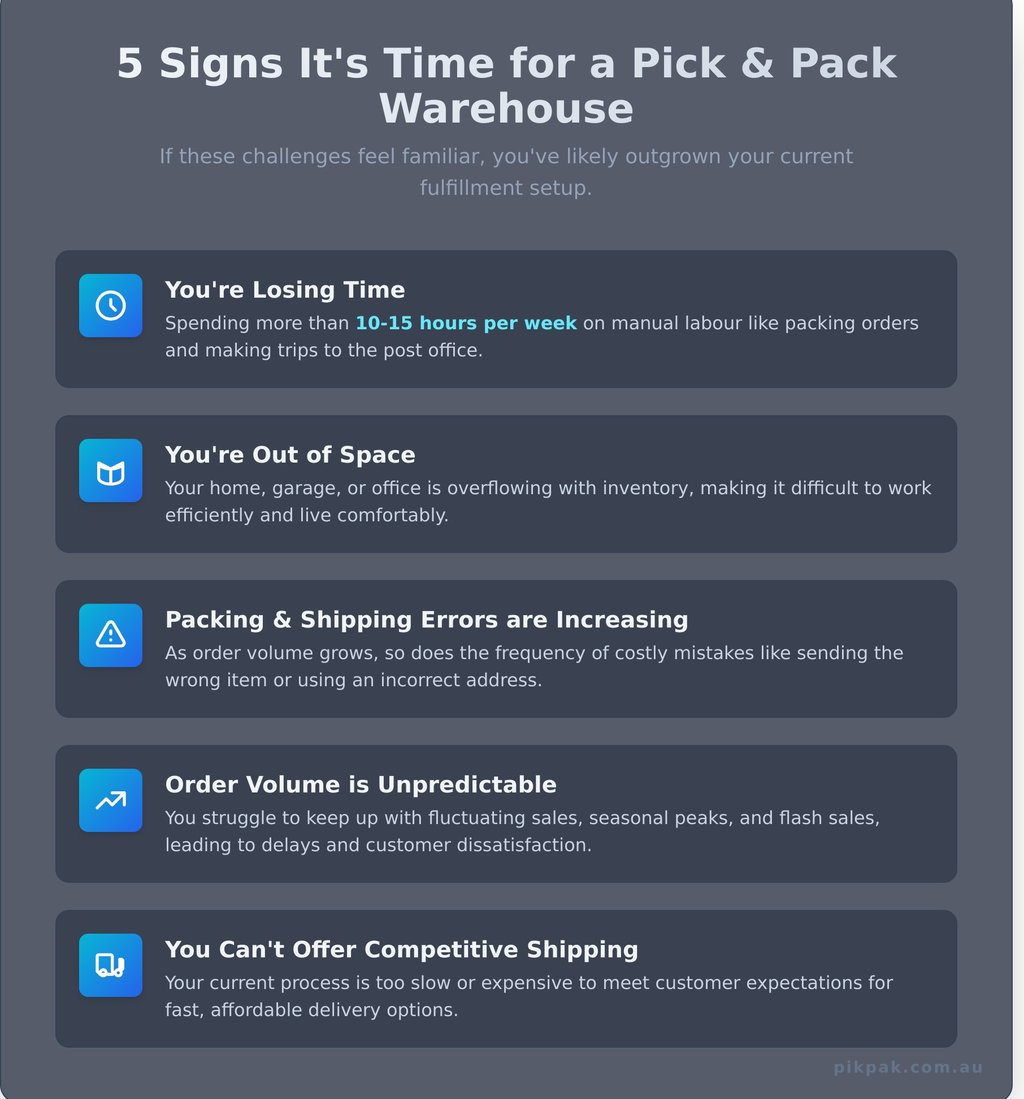
5 Signs It's Time to Use a Pick and Pack Warehouse
How do you know when you've officially outgrown your current setup? The transition point is different for every business, but there are common growing pains that signal it's time to consider outsourcing. If any of the following points sound familiar, it’s a strong indicator that you’re ready for a fulfillment partner.
A Checklist for Outsourcing Fulfillment
You're spending more than 10-15 hours a week packing orders. Your time is your most valuable asset. If a significant portion of it is spent on manual labour, you're missing growth opportunities.
You're running out of space in your home, office, or garage. When boxes start taking over your living or working areas, it's a clear sign you need a dedicated, professional storage solution.
You are making more frequent packing or shipping errors. As order volume increases, so does the chance of sending the wrong item or using an incorrect address. These mistakes damage customer trust and are costly to fix.
Your order volume is becoming unpredictable and hard to manage. If you're struggling to keep up with fluctuating sales, a fulfillment partner provides the stability and resources to manage any volume.
You want to offer faster, more competitive shipping options. If you can't compete with the fast delivery times customers expect, a 3PL can give you the operational efficiency you need to stay competitive.
How to Choose the Right Pick and Pack Partner
Not all fulfillment warehouses are created equal. The right partner should operate as a seamless extension of your team, providing reliable service and support that helps your business thrive. When evaluating your options, look for a company that is focused on making your life easier, not more complicated.
Key Features to Look For
Technology: The warehouse's software should integrate easily with your eCommerce platform (like Shopify or WooCommerce) to automate the entire order process.
Pricing: Look for a transparent, 'pay-as-you-go' pricing model without hidden fees or long-term contracts. You should only pay for the storage you use and the orders you ship.
Location: Strategically located warehouses can help optimize shipping times and costs for your customers across Australia.
Support: When issues arise, you need a responsive and helpful support team you can rely on to resolve them quickly.
The Pik Pak Difference: Fulfillment Made Simple
We believe logistics should be an enabler, not a headache. Our advanced cloud-based system gives you 24/7 visibility and control over your inventory and orders, all without complex software installations.
We reward your growth with better rates as your shipping volume increases, making us a true partner in your success. You can finally stop worrying about logistics and focus on your business.
We'll handle the hard work for you. Get a transparent quote and see how we can help.
Frequently Asked Questions
How much do pick and pack services cost in Australia?
Costs typically follow a 'pay-as-you-go' model. You'll be charged for receiving inventory, monthly storage (often per pallet or cubic meter), and a fee for each order picked and packed. Shipping costs are additional but are usually lower than standard rates due to bulk discounts.
How does my online store connect to the warehouse system?
Most modern 3PLs offer pre-built integrations for major eCommerce platforms like Shopify, WooCommerce, and Magento. This allows orders to flow automatically from your store to the warehouse management system (WMS) without any manual data entry.
Can I use my own branded packaging with a pick and pack service?
Absolutely. Reputable fulfillment partners will happily use your custom boxes, mailers, and marketing inserts to ensure your brand experience remains consistent. You simply ship your packaging materials to the warehouse along with your inventory.
What happens if a customer wants to return an order?
This process, known as reverse logistics, is also handled by your 3PL. They can receive returned items, inspect them according to your guidelines, and either return them to your inventory for resale or dispose of them as needed.
Is my inventory safe in a third-party warehouse?
Yes. Professional fulfillment centers are secure facilities with 24/7 monitoring, security systems, and robust inventory management processes to ensure your products are safe and accurately tracked from the moment they arrive.
Making the leap to a pick and pack warehouse is one of the most powerful steps you can take to grow your eCommerce business. It’s about more than just storage and shipping; it’s about reclaiming your time, improving your customer experience, and building a scalable foundation for future success. When you're ready to stop packing and start growing, a fulfillment partner is the solution. Free up your time. Get a custom fulfillment quote today.
References
Market Size & Growth
Australian 3PL Market Value: AUD $24.03 billion (2024), projected to reach AUD $44.32 billion by 2033
IMARC Group – Australia 3PL Market ReportE-commerce Fulfillment Market: USD $1.695 billion (2024), projected USD $3.813 billion by 2030
Grand View Research – Australia E-commerce FulfillmentAustralian E-commerce Market: AUD $75 billion (2025), up 8.7% from 2024
FreightAmigo – Australia's E-commerce Boom
3PL Pricing & Costs
3PL Storage Costs: AUD $8-15 per pallet/week (2025)
Wayfindr – Australian 3PL Warehousing ServicesPick & Pack Fees: $1.50-$4.50 per order + $0.30-$0.50 per item
CSG3PL – 3PL Costs in AustraliaComprehensive 3PL Pricing Guide: $2.50-$10/pallet/week storage, $1.50-$3/order pick fees
TLC Enterprise – 3PL Cost Factors
Accuracy & Performance Metrics
Pick & Pack Accuracy Standards: Best-in-class operations achieve 99.5-99.9% accuracy; below 99% requires operational review
Canadian Alliance – The 3% ProblemWarehouse Pick Rates: Average 71 picks/hour, ranging 50-150 depending on methodology
Canadian Alliance – Pick Rate Analysis
Technology & Integration
Warehouse Management Systems (WMS) Benefits: Real-time tracking, automated picking, 20-30% efficiency gains
AutoStore – WMS BenefitsAustralian 3PL Technology Adoption: AI-driven optimization, multi-channel integration standard
Quickmail – 3PL Industry Outlook
Consumer Expectations
Delivery Speed Expectations: 60% of Australian consumers expect same-day or next-day delivery in 2025
FreightAmigo – Consumer Expectations
Geographic Challenges
Australia's Logistics Complexity: 7.6 million sq km coverage with low population density creates unique last-mile challenges
GoLocad – E-commerce Fulfillment Challenges
Contact us
Useful Links
Established in 2007, Pik Pak specialises in warehousing and order fulfilment services designed specifically for online stores and eCommerce brands.
(c) 2025 All rights reserved.
Pik Pak Logistics Pty Ltd, ABN: 81 130 329 912
Our Partners